
Email Marketing in 2026: Why It's Still Your Most Profitable Marketing Channel
Email marketing still delivers ₹42 for every ₹1 spent. Learn how Indian businesses can build lists, segment audiences, automate campaigns, and maximize ROI in 2026.
VidyaSaaS Team
Super Administrator
Introduction
Every few years, someone declares email marketing dead.
In 2010, it was social media. In 2015, it was WhatsApp. In 2020, it was chatbots. In 2024, it was AI-generated content. And every time, email marketing quietly keeps delivering the best ROI in digital marketing.
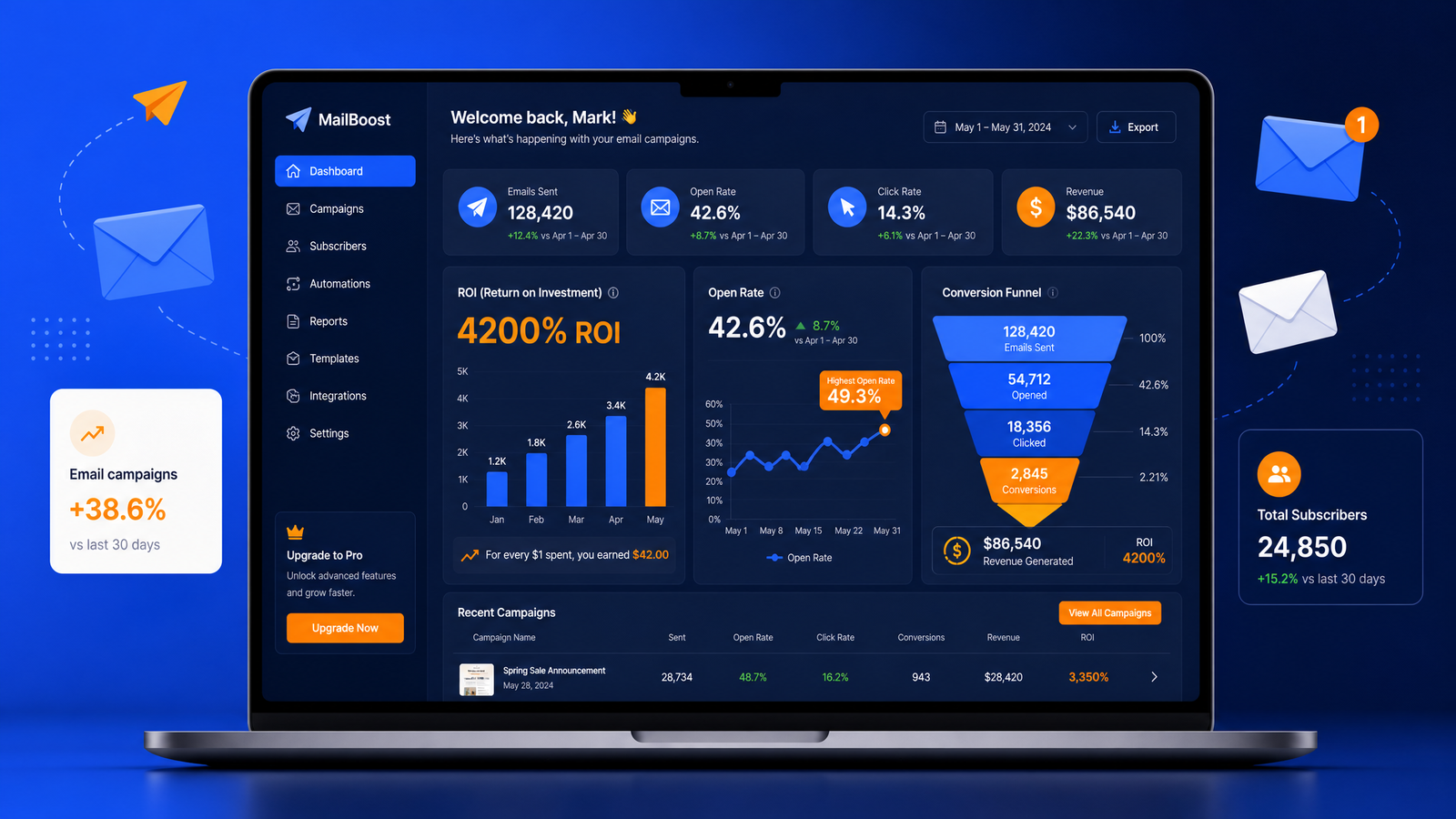
Here are the numbers. For every ₹1 you spend on email marketing, the average return is ₹42. That's 4,200% ROI. Compare that to Google Ads (around 200% ROI), Facebook Ads (around 150%), or influencer marketing (varies wildly). No other digital marketing channel comes close to email's return on investment. For a deeper dive, see email marketing guide.
The reason is simple. Email is the only channel where you own the relationship. You don't rent an audience from Google or Meta. Your email list is yours. It doesn't disappear if an algorithm changes or a platform shuts down.
For Indian businesses, email marketing in 2026 is more relevant than ever. The number of email users in India crossed 500 million in 2025. Indians check email an average of 5-7 times per day on mobile. And despite the rise of WhatsApp, email remains the preferred channel for professional communication, detailed offers, and long-form content.
This guide covers everything you need to build an email marketing system that actually works for your Indian business — list building, segmentation, automation, deliverability, and compliance.
The Email Marketing ROI Reality
Let's start with why email beats every other channel.
The ROI Data
According to industry reports, email marketing delivers:
- ₹42 return for every ₹1 spent — This is the headline number, but it varies by industry. E-commerce sees ₹36-₹45. B2B services see ₹30-₹40. Real estate sees ₹25-₹35.
- Average open rate of 21-33% — This is for well-maintained lists with proper segmentation. WhatsApp beats this, but no other channel does.
- Average click-through rate of 2.5-5% — This might seem low, but these are highly qualified clicks. Someone clicking an email link has already passed through multiple filters of intent.
- Conversion rate of 1-3% — Again, these conversions are typically higher value because they come from engaged subscribers.
Why Email Keeps Winning
You own the channel. Facebook can change its algorithm tomorrow and cut your organic reach to zero. Google can update its search algorithm and drop your traffic by 60%. But your email list? Nobody can take it away from you. You can reach your subscribers anytime you want. For a deeper dive, see lead generation tactics.
Email scales with trust. A subscriber who has received 20 emails from you trusts you more than someone who saw your Instagram post for the first time. That trust compounds. Every email you send is an investment in future conversions.
Email is measurable. You know exactly who opened, who clicked, who converted. No attribution guesswork. No "brand awareness" vanity metrics. Real data, real ROI.
Email works on Indian mobile. For all the talk about WhatsApp replacing email, the data shows something different. Email open rates on mobile in India are above 60%. Indians read their email on the go — during commute, between meetings, while waiting.
Building Your Email List the Right Way
Your email list is your most valuable marketing asset. But most Indian businesses build it wrong.
What Not to Do
- Don't buy email lists. They're full of invalid addresses, spam traps, and people who never opted in. You'll damage your sender reputation and end up in spam folders.
- Don't add everyone from your CRM to your email list without consent. That's a compliance issue and a deliverability problem.
- Don't trick people into subscribing (pre-checked boxes, hidden opt-in terms). Those "subscribers" will never open your emails and will hurt your engagement metrics.
Strategies That Actually Work
Website signup forms: Place them where they get seen. Top of the homepage, exit-intent popups, sidebar on blog posts, and after purchase confirmation. Keep the form to name + email only. Every additional field reduces conversion by 10-20%.
Lead magnets: Offer something valuable in exchange for the email. For a real estate business, it's a "Complete Home Buying Guide for First-Timers." For an e-commerce brand, it's a "10% Off Coupon." For an agency, it's a "Digital Marketing ROI Calculator."
Content upgrades: When someone reads a blog post on your site, offer a related downloadable resource. "Thanks for reading! Download our free checklist for WhatsApp Marketing in India" with an email opt-in. These convert at 20-50%.
Checkout opt-in: When someone buys from you, include a checkbox (unchecked by default) to join your email list. Post-purchase subscribers are your most engaged audience.
Social media lead gen: Run a campaign on Instagram or Facebook where the call to action is "Sign up for our email list to get exclusive tips." Use a link in bio or DM automation to capture emails.
Offline list building: For local businesses, collect emails at the counter or during events. "Subscribe to our newsletter for exclusive offers" with a simple QR code on a standee.
Lead Magnet Ideas for Indian Businesses
- E-commerce: "Style Guide for [Product Category]" or "Exclusive Coupon — 15% Off Your First Order"
- Real Estate: "First-Time Home Buyer's Checklist in India" or "RERA Guide for Property Buyers"
- Education/Coaching: "Free Study Planner" or "Career Guide for [Industry]"
- B2B Services: "ROI Calculator for [Service]" or "Industry Report 2026"
- Healthcare: "Weekly Meal Plan for [Health Goal]" or "Wellness Checklist"
Segmentation: The Difference Between Good and Great Email Marketing
Sending the same email to your entire list is a waste. Different subscribers have different needs, different purchase history, and different engagement levels.
Why Segmentation Matters
A segmented email campaign gets 14% higher open rates and 100% higher click-through rates compared to non-segmented campaigns. That's double the engagement just from sending the right message to the right people.
How to Segment Your Indian Email List
By Demographics:
- City or region (people in Mumbai don't care about offers in Delhi)
- Age group
- Gender (if relevant to your product)
By Behavior:
- Purchase history (what they bought, how much they spent)
- Browsing behavior (what pages they visited on your site)
- Email engagement (opens, clicks, inactive)
- Cart abandonment
By Lifecycle Stage:
- New subscriber (just joined, needs welcome sequence)
- Active buyer (bought recently)
- Repeat buyer (bought multiple times)
- Lapsed customer (hasn't bought in 6+ months)
By Interest:
- Product categories they've shown interest in
- Content they've engaged with
- Feedback they've given
Practical Segmentation for Indian Businesses
Example: An e-commerce store selling home decor.
Segment A: "Mumbai customers who bought living room items in the last 3 months." Send: "New living room collection — just arrived in stock!"
Segment B: "Delhi customers who browsed bedroom items but didn't buy." Send: "The bedroom items you loved, now 10% off."
Segment C: "Customers who haven't bought in 12 months." Send: "We miss you! Here's ₹500 off your next order."
Segment D: "New subscribers who signed up but haven't purchased." Send: "Welcome! Here's your 15% off coupon and our top picks."
Same store, four different segments, four different emails. Every email feels personal and relevant. None of them are generic blasts.
Personalization Beyond "{First Name}"
Most marketers think personalization means adding the subscriber's first name to the subject line. "Hi Rohan, check out our new collection." That's table stakes in 2026.
Real personalization goes much deeper.
Behavioral Personalization
- "Based on what you bought, you might like this" — product recommendations based on purchase history
- "Other customers who bought [product] also bought [related product]" — cross-sell
- "Your cart items are waiting" — cart abandonment with specific items listed
Contextual Personalization
- "It's been 30 days since you bought [product]. Time to restock?" — purchase cycle triggers
- "We noticed you browsed [category]. Here's our top-rated pick." — browse abandonment
- "Happy birthday! Here's a special gift from us." — birthday emails
Dynamic Content
Instead of sending the same email to everyone, use dynamic content blocks that change based on the subscriber.
For a restaurant chain: "Order from our [subscriber's nearest location] outlet and save ₹100."
For a multi-city real estate developer: "New projects in [subscriber's preferred city] starting at ₹[price]."
For an e-commerce brand: "Women's new arrivals" showing different products based on past purchases.
Email Automation: Your 24/7 Sales Team
Automation is where email marketing transforms from a manual task to a revenue machine that runs while you sleep.
Essential Automated Sequences
Welcome Series (3-5 emails): This is the most important sequence in your entire email program. Welcome emails have 4x the open rates and 5x the click-through rates of regular campaigns.
Email 1 (immediate): "Welcome! Here's what to expect." Deliver the lead magnet you promised. Email 2 (24 hours later): "Here's how we're different." Tell your brand story and unique value. Email 3 (48 hours): "Our most popular [products/services]." Showcase what others love. Email 4 (72 hours): "Ready to get started?" Strong CTA with a limited-time offer.
Abandoned Cart (3 emails): Email 1 (1 hour after abandonment): "Forgot something?" Friendly reminder with product image. Email 2 (24 hours): "Still thinking about it?" Include customer reviews of the product. Email 3 (48 hours): "Your cart is about to expire." Create urgency with a limited-time discount.
Re-engagement (2-3 emails): For subscribers who haven't opened any emails in 90+ days. Email 1: "Haven't heard from you in a while. Want to hear from us?" Email 2: "Last chance. Confirm you want to stay subscribed." Email 3: "We're sorry to see you go. If you stay, here's a special offer." If still no engagement, remove them from your list.
Post-Purchase (3-4 emails): Email 1 (immediate): Order confirmation with details. Email 2 (3 days after delivery): "How's your [product]? Share your experience." Email 3 (7 days): Related product recommendations. Email 4 (30 days): "Time for your next purchase? Here's a loyalty offer."
Setting Up Automation on a Budget
You don't need expensive tools to start. For Indian businesses:
- Mailchimp Free Plan: Up to 500 subscribers, basic automation, email templates
- MailerLite Free Plan: Up to 1,000 subscribers, excellent automation builder
- SendinBlue (now Brevo): Pay-as-you-go pricing, good for growing lists
- Benchmark Email: No-code automation, good for small businesses
Start with one sequence — the welcome series. Get it working perfectly. Then add abandoned cart. Then post-purchase. Build your automation system one piece at a time.
A/B Testing: Small Changes, Big Results
Email marketing is a numbers game. Small improvements compound into significant gains over time. A/B testing is how you find those improvements.
What to Test
Subject lines: This is the single highest-impact thing you can test. A 20% improvement in open rates translates to 20% more people seeing your content.
Test formats like:
- Personal vs impersonal ("Rohan, check this out" vs "New collection live")
- Question vs statement ("Looking for a new look?" vs "New collection just dropped")
- Curiosity gap ("The one thing most buyers miss" vs "Complete home buying guide")
- Numbers vs words ("3 ways to save on your next purchase" vs "Ways to save")
Sender name: People open emails from people they trust. Test "VidyaSaaS Team" vs "Rohan from VidyaSaaS" vs "VidyaSaaS Marketing."
Preheader text: This is the snippet that appears after the subject line in most email clients. Use it to tease the email content or add a secondary hook.
Call to action: Test button text, button color, placement (top vs bottom vs middle). A 10% improvement in CTR can double your revenue over a year.
Send time: Test sending at 8 AM vs 12 PM vs 7 PM. The "best time" varies by audience. Test your own list rather than following generic advice.
Testing Method
- Test one variable at a time
- Send to 20% of your list for the test (10% variant A, 10% variant B)
- Let the test run until you have statistically significant results (usually 500+ opens per variant)
- Send the winning version to the remaining 80%
- Document what you learn and apply to future campaigns
Mobile Email Optimization for Indian Readers
80% of emails in India are opened on mobile devices. If your emails don't look good on a 6-inch screen, you're losing readers.
Mobile Email Design Rules
Single column layout. Two-column designs don't work on mobile. Everything stacks in a single column.
Large fonts. Use at least 14px for body text and 22px for headlines. Anything smaller is hard to read on a phone.
Big buttons. Make your CTA buttons at least 44x44 pixels. They need to be tappable with a thumb. Don't make people zoom in to click.
Short subject lines. On mobile, you get about 40 characters before the subject line gets cut off. Front-load your key message.
Preheader matters. The preheader text is more visible on mobile. Use it wisely.
Don't rely on images. Some email clients block images by default. If your entire message is an image, people won't see anything. Use text + image combinations.
Test before sending. Send test emails to Gmail, Yahoo, Outlook, and iCloud. Check how they render on an iPhone and an Android phone.
Email Deliverability: How to Actually Reach the Inbox
You can write the perfect email, but if it lands in the spam folder, nobody reads it. Here's how Indian businesses can improve deliverability.
The Factors That Matter
Sender reputation: ISPs track how many times your emails get marked as spam. A bad reputation means your emails go straight to spam. The best way to protect your reputation: only email people who want to hear from you.
Authentication: Set up SPF, DKIM, and DMARC records for your sending domain. Without these, ISPs treat your emails as suspicious. Most email platforms provide setup guides.
Engagement: ISPs watch how people interact with your emails. High open rates, high click rates, and low spam complaints = good deliverability. Low engagement = your emails go to spam.
List hygiene: Remove inactive subscribers regularly. A subscriber who hasn't opened in 6 months is hurting your deliverability. Remove them or send a re-engagement sequence.
Indian-Specific Deliverability Issues
- Indian ISPs (Rediffmail, IndiaTimes) have different spam filters. Test your emails specifically on these platforms.
- Many Indian businesses send from shared IP addresses. If someone else on that IP is spamming, it affects your deliverability. Use a dedicated IP if your volume is high (50,000+ emails per month).
- ".in" domain emails often face different treatment than ".com" emails. Test both.
- Avoid spam trigger words common in Indian marketing: "FREE," "ACT NOW," "LIMITED TIME," "DON'T MISS." These trigger spam filters even in legitimate emails.
A Simple Deliverability Checklist
- [ ] SPF, DKIM, and DMARC configured
- [ ] Dedicated sending domain (don't send from your transactional email domain)
- [ ] Warm up new sending domains (start with 50 emails/day, increase gradually)
- [ ] Remove hard bounces immediately
- [ ] Remove subscribers after 3 consecutive soft bounces
- [ ] Monitor spam complaint rate (keep below 0.1%)
- [ ] Process unsubscribes within 48 hours
- [ ] Don't email cold lists
- [ ] Include plain-text version of every email
Email Design Trends for 2026
Email design has evolved. Plain text marketing emails — which dominated in 2023-2025 — are giving way to richer experiences that still respect mobile constraints.
Dark mode optimization. Most email clients now support dark mode. Design your emails to look good in both light and dark modes.
Minimalist design. Less is more. A clear headline, one hero image, 3-4 lines of body text, and one CTA button. That's all you need.
Interactive elements. Accordions that expand, image carousels, hover effects. Apple Mail and some Android clients support these. Test before relying on them.
Personalized video. Including a short personalized video (the subscriber's name, a specific product recommendation) boosts engagement dramatically. Tools like Bonjoro and Loom make this scalable.
AMP for Email. Interactive forms directly in the email — survey, booking, product purchase — without clicking through to a website. Gmail supports this. Implementation is technical but powerful.
Indian Data Protection Compliance
India's Digital Personal Data Protection (DPDP) Act is changing how businesses handle user data. Email marketing falls squarely under its scope.
What You Need to Do
- Get explicit consent. Pre-checked boxes don't count. The subscriber must actively opt in.
- Provide clear privacy notice. Tell subscribers what data you collect, why, and how you use it.
- Make unsubscribing easy. Every email must have a visible, one-click unsubscribe link. Process the unsubscribe within 48 hours.
- Data minimization. Don't collect more data than you need for email marketing.
- Right to be forgotten. If a subscriber asks you to delete their data, comply within a reasonable timeframe.
These requirements aren't just legal boxes to tick. They're good email marketing practice. Consent-driven lists have higher engagement, lower spam complaints, and better deliverability.
📚 Related Articles You Might Like:
Conclusion
Email marketing in 2026 is alive, profitable, and essential for Indian businesses. The ₹42 return on every ₹1 spent isn't a myth — it's the result of a channel that combines owned audience, precise targeting, automation, and measurable results.
The businesses that win with email are the ones who build lists legitimately, segment ruthlessly, personalize beyond first names, automate the repetitive, design for mobile, and deliver only to the inbox.
If you're not doing email marketing yet, start today. Pick a platform. Create a lead magnet. Build your first automated welcome sequence. And begin the compounding process of building an audience you own.
If you need help setting up or optimizing your email marketing strategy, VidyaSaaS can help. We build email automation systems for Indian businesses that actually deliver ROI. Reach us at info@vidyasaas.com or +91 97542 70102.
Want Results Like This?
Get a free digital marketing audit and custom growth plan for your business.
Get Free AuditVidyaSaaS Team
Super AdministratorPart of the VidyaSaaS team — a group of digital marketing strategists, content specialists, and growth experts helping businesses across India achieve measurable results through data-driven marketing.
More about our teamRelated Articles
Handpicked content to help you grow your business
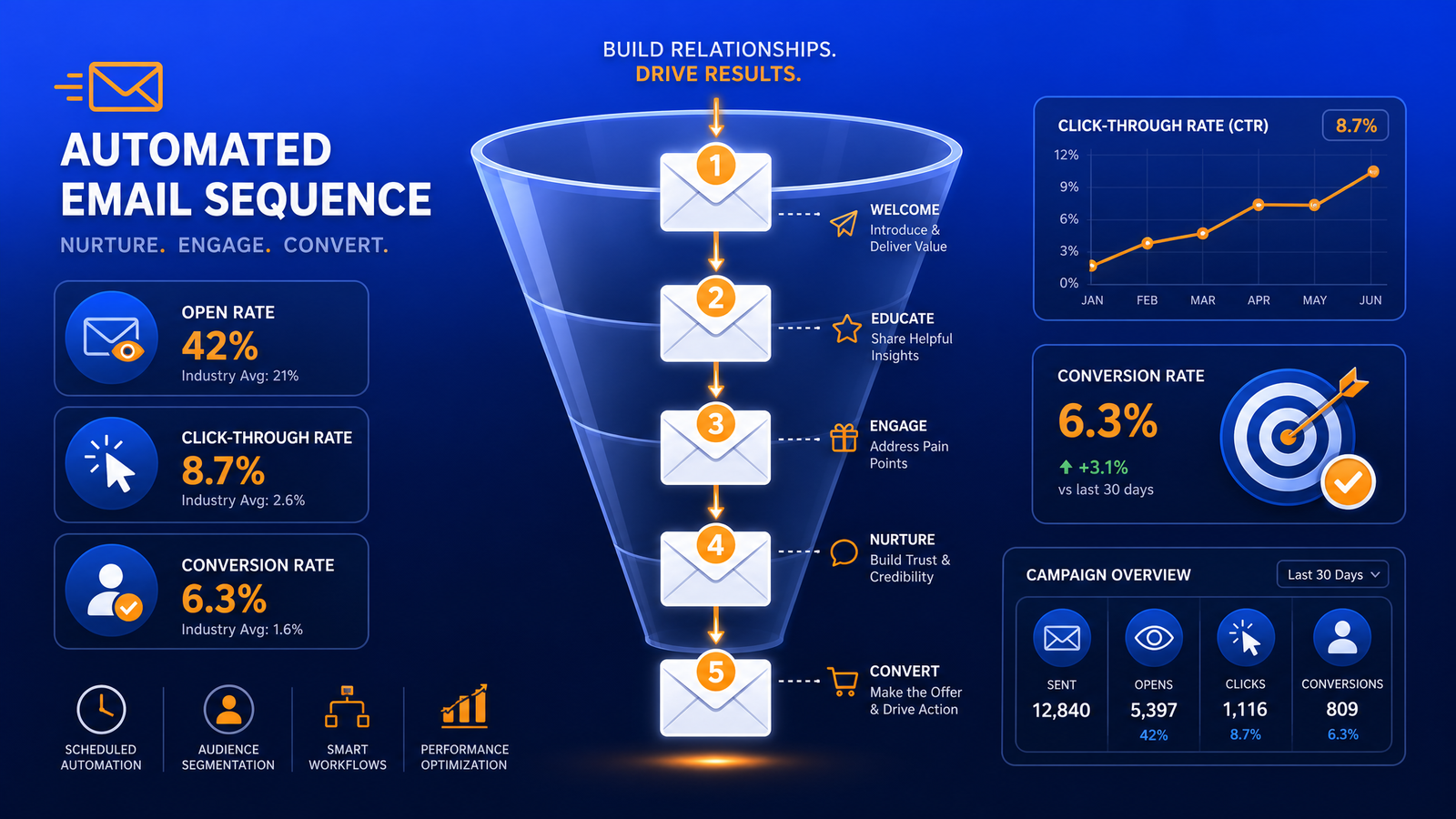
Drip Campaigns Explained: How Automated Email Sequences Drive Sales on Autopilot
Learn what drip campaigns are and how to build automated email sequences that nurture leads, recover...
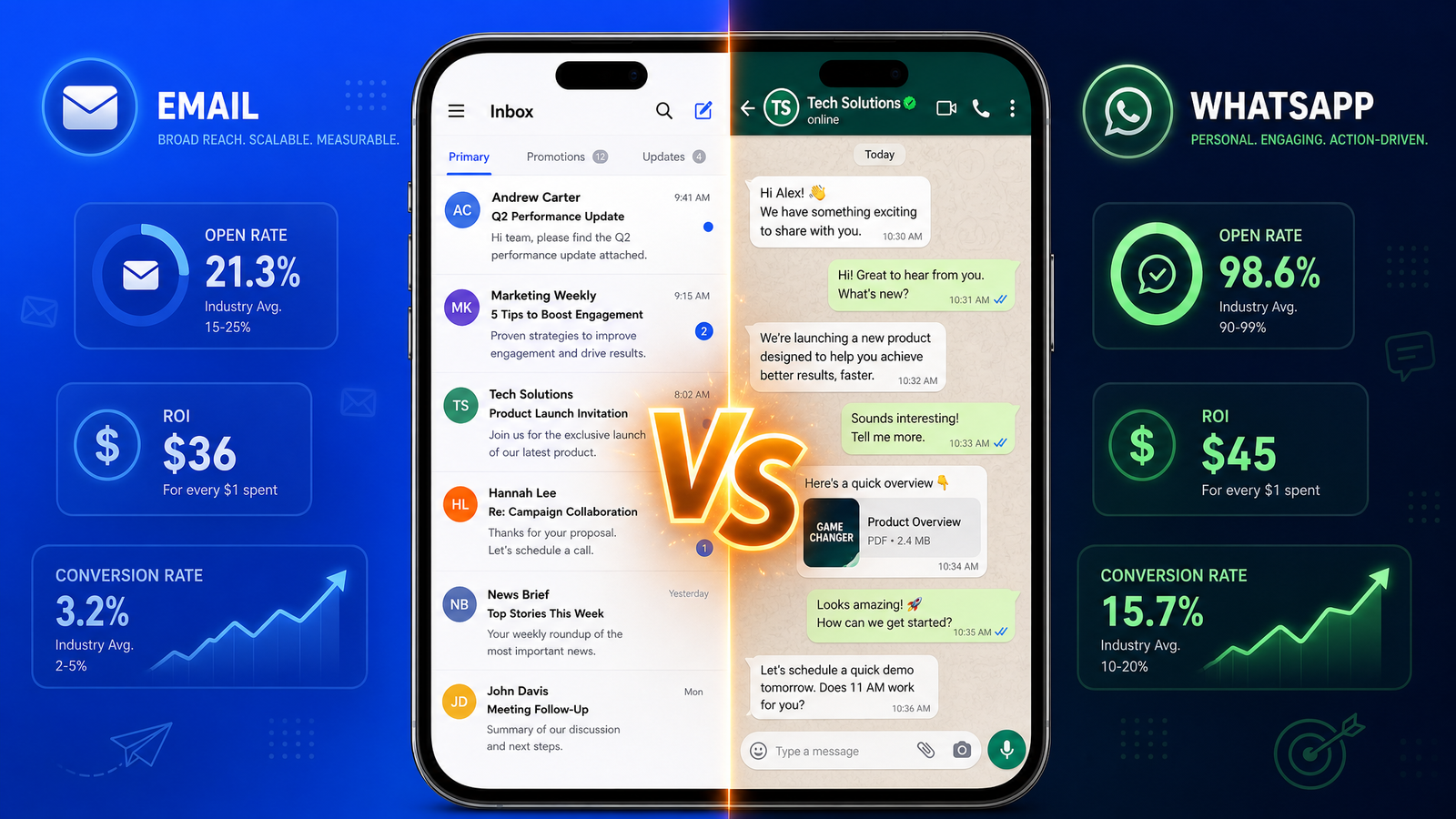
Email Marketing vs WhatsApp Marketing: Which Channel Gives Better ROI for Indian Businesses?
Email vs WhatsApp marketing — a data-driven comparison for Indian businesses. Open rates, conversion...
Ready to Grow Your Business?
Let's discuss how we can create a data-driven digital marketing strategy tailored to your goals.