
Drip Campaigns Explained: How Automated Email Sequences Drive Sales on Autopilot
Learn what drip campaigns are and how to build automated email sequences that nurture leads, recover abandoned carts, and drive sales on autopilot for Indian businesses.
VidyaSaaS Team
Super Administrator
Introduction
Here's a scenario every business owner knows. A potential customer visits your website. They browse your products. They fill out a form asking for pricing. And then... nothing. They don't buy. They don't call. They just disappear into the digital void.
What do you do?
Most business owners do one of two things. Either they ignore the lead completely (wasting all the money they spent acquiring that visitor), or they pester them with daily calls until they block the number. For a deeper dive, see email marketing guide.
Both are wrong.
The right answer is a drip campaign. A carefully timed sequence of emails that educates, nurtures, and gently guides that lead toward a purchase. It works while you sleep. It works while you're on vacation. It works while you're handling other customers.
Drip campaigns are the closest thing marketing has to a "set it and forget it" tool. You build it once, and it runs forever, converting leads into customers without any ongoing effort from your team. For a deeper dive, see lead generation tactics.
This guide covers everything you need to know about drip campaigns — what they are, the types that work, how to build them, and how Indian businesses are using them to drive sales on autopilot.
What Are Drip Campaigns?
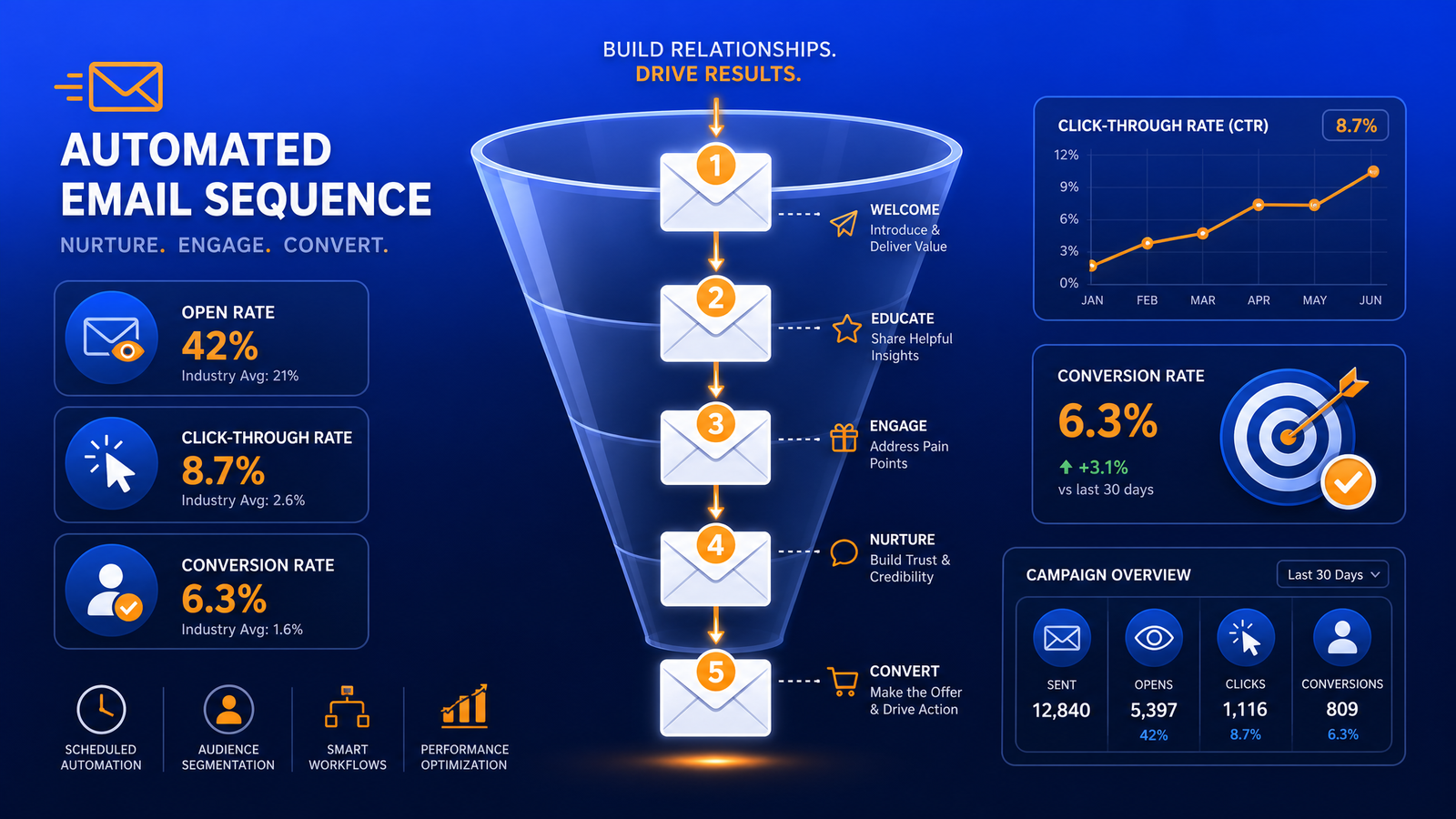
A drip campaign is a series of automated emails sent to a subscriber based on a specific trigger or schedule. The "drip" refers to the gradual release of information — like a faucet dripping, not a firehose blasting.
The key components:
- Trigger: Something starts the campaign. A new subscriber joins. A customer buys something. Someone abandons their cart.
- Sequence: A set of emails, usually 3-7, sent at specific intervals.
- Automation: Once triggered, the sequence runs automatically without human intervention.
- Goal: Each email moves the recipient toward a specific action — purchase, booking, download, or re-engagement.
What Makes Drip Campaigns Different from Regular Email Blasts
A regular email blast sends the same message to everyone at the same time. A blast goes out on Tuesday at 10 AM, and everyone on your list gets it. For a deeper dive, see conversion rate optimization.
A drip campaign sends different messages to different people based on what they did. Person A who just signed up gets email 1 of the welcome series. Person B who abandoned their cart gets email 2 of the cart recovery series. Person C who hasn't bought in 6 months gets email 4 of the re-engagement series.
This behavioral targeting is what makes drip campaigns so effective. Every email feels like it was written specifically for that person at that moment.
The 6 Essential Types of Drip Campaigns
Not all drip campaigns serve the same purpose. Here are the six types every Indian business should have.
1. Welcome Series
The welcome series is the most important drip campaign you will ever build. It fires when someone subscribes to your email list for the first time.
Why it matters: A welcome email has 4x the open rate and 5x the click-through rate of regular marketing emails. That's because the subscriber just opted in — they're at peak interest. Your welcome series either converts this interest into engagement or loses it forever.
A typical welcome sequence for an Indian business:
Email 1 (immediate): "Welcome to [Brand]!" Deliver the lead magnet they signed up for (guide, discount code, checklist). Set expectations — how often you'll email, what kind of content to expect.
Email 2 (24 hours later): "Here's what makes us different." Share your brand story, your values, what sets you apart from competitors. Include a testimonial or social proof.
Email 3 (48 hours): "Our most popular products/services." Showcase your bestsellers. Social proof again — these are the things other customers loved.
Email 4 (72 hours): "Ready to get started?" A direct offer. Limited-time discount or free consultation. Clear call to action.
Pro tip: Your welcome series should convert at least 3-5% of subscribers to customers. If it's below that, test different offers and messaging.
2. Lead Nurturing Sequence
Not everyone is ready to buy when they first interact with your business. The lead nurturing drip campaign bridges the gap between initial interest and purchase decision.
When it fires: Someone downloads a lead magnet, fills a contact form, or requests a quote.
Goal: Educate, build trust, and position your business as the obvious choice.
A 6-email lead nurturing sequence for a service business:
Email 1 (day 1): "Thanks for your interest." Deliver whatever they asked for. Set the stage for what's coming.
Email 2 (day 3): "Here's a story from a customer just like you." Case study or testimonial. Make it relatable to their situation.
Email 3 (day 6): "Three things most people miss when [solving this problem]." Educational content that positions you as an expert.
Email 4 (day 10): "Here's how we handle [common objection]." Address the main reasons people might hesitate to work with you.
Email 5 (day 14): "What would it mean if [desired outcome]?" Emotional appeal. Help them visualize the benefit.
Email 6 (day 21): "Let's talk." Direct call to action — book a call, schedule a demo, request a quote.
Real example: A digital marketing agency in Bhopal uses this sequence. A lead downloads their "SEO Checklist for Local Businesses." Over the next 3 weeks, they receive case studies of similar businesses, an explanation of how the agency's process works, and finally an invitation for a free audit call. The sequence converts 8% of checklist downloaders into paid clients.
3. Abandoned Cart Sequence
This is the money-maker for e-commerce businesses. A customer adds items to their cart but leaves without buying. The abandoned cart drip brings them back.
Why it's so effective: Cart abandonment rates across Indian e-commerce average 70-75%. That's three out of four shoppers leaving without buying. An abandoned cart sequence can recover 10-15% of those lost sales.
A 3-email abandoned cart sequence:
Email 1 (1 hour after abandonment): "You left something behind." Gentle reminder with product image and a direct link back to the cart. No discount yet — just a reminder.
Email 2 (24 hours later): "Still thinking it over?" Include customer reviews of the product. Show that others loved it. Add social proof.
Email 3 (48 hours): "Your cart is expiring." Create urgency. "Your items are in high demand. Complete your order now and get free shipping" or "Here's 10% off to help you decide."
Pro tip: Test the timing. Some businesses see better results with the first email after 15 minutes (when the purchase intent is still fresh). Others find 3-4 hours works better. Test and see.
4. Post-Purchase Sequence
The sale isn't the end. It's the beginning of the customer relationship. The post-purchase sequence turns a one-time buyer into a repeat customer.
A 4-email post-purchase sequence:
Email 1 (immediate): Order confirmation with all details. What they bought, when it will arrive, tracking information. This email should be purely functional — it's the most opened email of the sequence.
Email 2 (3-5 days after delivery): "How's your [product]?" Ask for a review or feedback. Show you care about their experience.
Email 3 (7 days after): "You might also like." Cross-sell or upsell recommendations based on what they bought. "Customers who bought [product] also bought [related item]."
Email 4 (30 days after): "We value you." Loyalty program invitation, referral offer, or exclusive preview of new products.
5. Re-engagement Sequence
Subscribers who stop opening your emails are dragging down your deliverability. The re-engagement sequence either brings them back or removes them from your list.
When it fires: A subscriber hasn't opened any of your emails in 90 days.
A 3-email re-engagement sequence:
Email 1 (day 90 of inactivity): "Have we lost you?" Honest subject line. Ask if they still want to hear from you.
Email 2 (day 97): "Last chance to stay connected." Offer something valuable — an exclusive discount, a free resource, a special tip.
Email 3 (day 104): "We're cleaning our list." Straightforward: "If you don't click this link, we'll remove you from our list. No hard feelings."
What happens after: If they engage with any email in this sequence, they go back to your regular list. If they don't, remove them. A smaller, engaged list is worth more than a large, dead list.
6. Onboarding Sequence
For SaaS products, coaching programs, membership sites, and any business where the customer needs to learn how to use what they bought.
A 5-email onboarding sequence:
Email 1 (immediate): "Welcome! Here's your first step." Link to login, basic setup instructions.
Email 2 (day 2): "Setting up [feature]." One specific feature, explained clearly.
Email 3 (day 5): "Pro tip: [time-saving hack]." Help them get more value faster.
Email 4 (day 10): "Common questions answered." FAQ-based content.
Email 5 (day 14): "How's it going?" Check in. Ask for feedback. Offer a personal onboarding call.
Good onboarding reduces churn. If customers learn to use your product properly in the first 30 days, they're far more likely to stick around for months and years.
How to Map the Customer Journey to Drip Campaigns
The most effective drip campaigns aren't built in isolation. They're designed to match the customer journey.
The Journey Mapping Process
Step 1: Identify your customer stages.
Map out the journey from first contact to loyal customer:
Unaware → Aware → Interested → Considering → Purchasing → Using → Advocating
Step 2: Identify the triggers at each stage.
- What makes someone move from Unaware to Aware? A Google search? A social media post? A friend's recommendation?
- What makes them move from Interested to Considering? A website visit? A brochure download?
- What makes them move from Considering to Purchasing? A demo? A free trial? A consultation call?
Step 3: Assign drip campaigns to each stage.
- Stage 1-2 (Aware → Interest): Welcome series
- Stage 3 (Consideration): Lead nurturing sequence
- Stage 4 (Purchase decision): Abandoned cart or trial-to-paid sequence
- Stage 5 (Post-purchase): Post-purchase / onboarding sequence
- Stage 6 (Re-engage lapsed): Re-engagement sequence
Step 4: Set handoff rules.
What happens when someone buys while in the middle of a lead nurturing sequence? They should exit the nurturing sequence and enter the post-purchase sequence.
What happens when someone re-engages after a re-engagement sequence? They return to the main list and continue receiving broadcasts.
These rules need to be configured in your email platform.
Timing and Frequency: How Often Should You Email?
Getting the timing right is critical. Email too often and people unsubscribe. Email too rarely and they forget who you are.
Timing Guidelines by Sequence Type
Welcome series: Tighter timing. Days 1, 2, 3, 5 (5 emails in 5 days). The subscriber just opted in. They're interested. Strike while the iron is hot.
Lead nurturing: Wider spacing. Days 1, 3, 7, 14, 21 (5 emails over 3 weeks). The lead is evaluating. Give them time to digest each piece of content.
Abandoned cart: Quick and spaced. 1 hour, 24 hours, 48 hours. Too aggressive = annoying. Too patient = lost opportunity.
Post-purchase: Immediately, then slowing down. Day 0 (confirmation), day 3, day 7, day 30. The customer needs immediate information, then periodic touchpoints.
Re-engagement: Weekly over 2-3 weeks. Give them chances to re-engage before removing them.
Adjusting for the Indian Audience
Indian subscribers generally prefer slightly less frequent email than Western audiences. 2-3 emails per week from a business is a comfortable frequency for most. 5+ emails per week feels like spam.
For drip campaigns specifically, keep total emails across all active sequences to 5-7 per week maximum. If a subscriber is in both the lead nurturing sequence (getting 3 emails per week) and receiving broadcast emails (2 per week), that's 5 total. Manageable.
Content for Each Email in a Drip Sequence
Every email in a drip sequence should have a specific purpose. Don't just fill space. Each email should either educate, build trust, or drive action.
Email 1: The Hook
Purpose: Deliver value immediately. This email justifies their decision to subscribe. Must include: The lead magnet or promised content. A welcome that sets expectations. Avoid: Multiple offers or confusing CTAs. One job: deliver and welcome. Example subject: "Here's your [guide/checklist/discount], [name]"
Email 2: The Story
Purpose: Build connection. Share your brand's story and values. Must include: Authentic story about why you started the business. A relatable founder perspective. Avoid: Corporate jargon. Be human. Example subject: "Why we started [company] (and why it matters to you)"
Email 3: The Proof
Purpose: Social proof. Show that others trust you. Must include: Customer testimonials, case studies, numbers (customers served, revenue generated, etc.). Avoid: Unsourced claims. Use real numbers and real names (with permission). Example subject: "How [customer name] solved [problem] with our help"
Email 4: The Education
Purpose: Demonstrate expertise. Teach something valuable. Must include: Actionable advice, step-by-step guidance, or industry insight. Avoid: Fluff. Make sure the reader learns something they can use immediately. Example subject: "Three things nobody tells you about [topic]"
Email 5: The Offer
Purpose: Drive action. Convert interest into purchase. Must include: Clear, specific offer. Compelling call to action. Limited-time element (if appropriate). Avoid: Vague offers. Be specific about what they get and what they need to do. Example subject: "Ready to [desired outcome]? Here's a special offer just for you"
Email 6: The Urgency
Purpose: Handle objections and create urgency. Must include: Overcome the main reason someone hasn't bought yet. Address doubt. Limited-time scarcity. Avoid: Fake urgency. If the "offer expires tomorrow" but comes back next week, you lose trust. Example subject: "This offer ends in 48 hours — should I keep it open for you?"
Tools for Drip Campaign Automation
You don't need a complex setup to run drip campaigns. Here are tools suited for Indian businesses at different stages.
Free/Entry-Level Tools
MailerLite: Free up to 1,000 subscribers. Excellent drag-and-drop automation builder. All essential drip campaign features included. Best for businesses just starting with email automation.
Mailchimp: Free up to 500 subscribers. Good automation builder but limited template flexibility on the free plan.
Brevo (formerly SendinBlue): Pay-as-you-go pricing. No free tier but charges based on emails sent, not subscribers. Good for businesses with large lists but low sending frequency.
Mid-Range Tools
ActiveCampaign: ₹8,000-₹15,000/month. Best-in-class automation builder. Conditional logic, split testing, lead scoring. For serious email marketers.
GetResponse: ₹5,000-₹10,000/month. Good all-rounder with webinar integration. Strong for course creators and coaches.
ConvertKit: ₹7,000-₹12,000/month. Built for creators. Simple and powerful for content-focused businesses.
Enterprise Tools
HubSpot: ₹20,000+/month. Full CRM + email marketing. Best for B2B with complex sales processes.
Klaviyo: ₹10,000+/month. Built for e-commerce. Advanced segmentation based on purchase behavior.
Choose the tool that matches your current stage. Don't overbuy. A MailerLite account with a well-planned welcome series will outperform an ActiveCampaign account that's barely configured.
Metrics to Track in Drip Campaigns
If you're not measuring, you're guessing. Here are the specific metrics that tell you whether your drip campaigns are working.
Open Rate
What it tells you: Are your subject lines working? Is the timing right?
Good benchmark for drip emails: 30-50% (higher than broadcast emails because these are more targeted).
What to do if it's low: Improve subject lines. Test different send times. Check if your emails are landing in spam.
Click-Through Rate (CTR)
What it tells you: Is the content compelling? Is the CTA clear?
Good benchmark: 3-10% depending on the email's position in the sequence. First emails should have higher CTR.
What to do if it's low: Improve the call to action. Make sure the content is relevant. Test different offer types.
Conversion Rate
What it tells you: Is the sequence driving actual business results?
Good benchmark: 2-5% overall sequence conversion rate. Welcome series should convert 3-8%.
What to do if it's low: Check if you're targeting the right audience. Review your offer. Ensure the sequence length is appropriate.
Unsubscribe Rate
What it tells you: Is your frequency or content pushing people away?
Good benchmark: Below 0.5% per email. Above 1% means something is wrong.
What to do if it's high: Reduce frequency. Improve content relevance. Tighten your targeting.
Sequence Completion Rate
What it tells you: Are people sticking through the whole sequence or dropping off?
Good benchmark: 60-80% of people who start a drip sequence should complete it.
What to do if it's low: Shorten the sequence. Make each email more engaging. Improve the value prop in early emails.
Common Drip Campaign Mistakes (And How to Fix Them)
Mistake 1: One Sequence for Everyone
Sending the same welcome sequence to a CEO and a college student doesn't make sense. Their needs are different.
Fix: Create multiple sequences based on how the subscriber joined. Different lead magnets should trigger different sequences.
Mistake 2: Too Many Emails, Too Fast
Three emails in three days is fine for a welcome series. Three emails in three days PLUS two newsletters PLUS a promotional blast is overwhelming.
Fix: Coordinate your sequences with your overall email calendar. Use suppression rules — if someone is already in a sequence, exclude them from related broadcasts.
Mistake 3: No Clear CTA
Every drip email needs one clear call to action. Not five. Not a menu of options. One.
Fix: Before writing any drip email, decide: "What exactly do I want the reader to do after reading this?" Write the CTA first, then the email.
Mistake 4: Not Updating Sequences
A drip campaign you set up in 2024 might be outdated by 2026. Offers change. Pricing changes. The world changes.
Fix: Review every sequence quarterly. Update offers, refresh testimonials, check that links still work.
Mistake 5: No Exit Strategy
What happens when someone completes a sequence? They should either move to a maintenance list (for regular broadcasts), trigger a new sequence, or be assigned a sales follow-up.
Fix: Define what happens at the end of every sequence. Don't let leads fall into a black hole.
📚 Related Articles You Might Like:
Conclusion
Drip campaigns are the most underutilized tool in Indian digital marketing. Most businesses spend heavily on acquiring leads — Google Ads, Facebook Ads, content marketing — and then do nothing with those leads once they arrive.
A well-built drip campaign changes that. It turns every lead that enters your funnel into a nurtured prospect who receives timely, relevant messages that guide them toward a purchase. And it does this entirely on autopilot.
Start with a welcome series. It's the easiest to build and delivers the most immediate results. Once that's running smoothly, add abandoned cart (if you're e-commerce), then lead nurturing, then post-purchase. Build your automation system one sequence at a time.
VidyaSaaS helps Indian businesses build and optimize email drip campaigns that convert. If you're spending money on lead generation but not following up automatically, you're leaving 70% of your potential revenue on the table. Let's fix that. Reach us at info@vidyasaas.com or +91 97542 70102.
Want Results Like This?
Get a free digital marketing audit and custom growth plan for your business.
Get Free AuditVidyaSaaS Team
Super AdministratorPart of the VidyaSaaS team — a group of digital marketing strategists, content specialists, and growth experts helping businesses across India achieve measurable results through data-driven marketing.
More about our teamRelated Articles
Handpicked content to help you grow your business
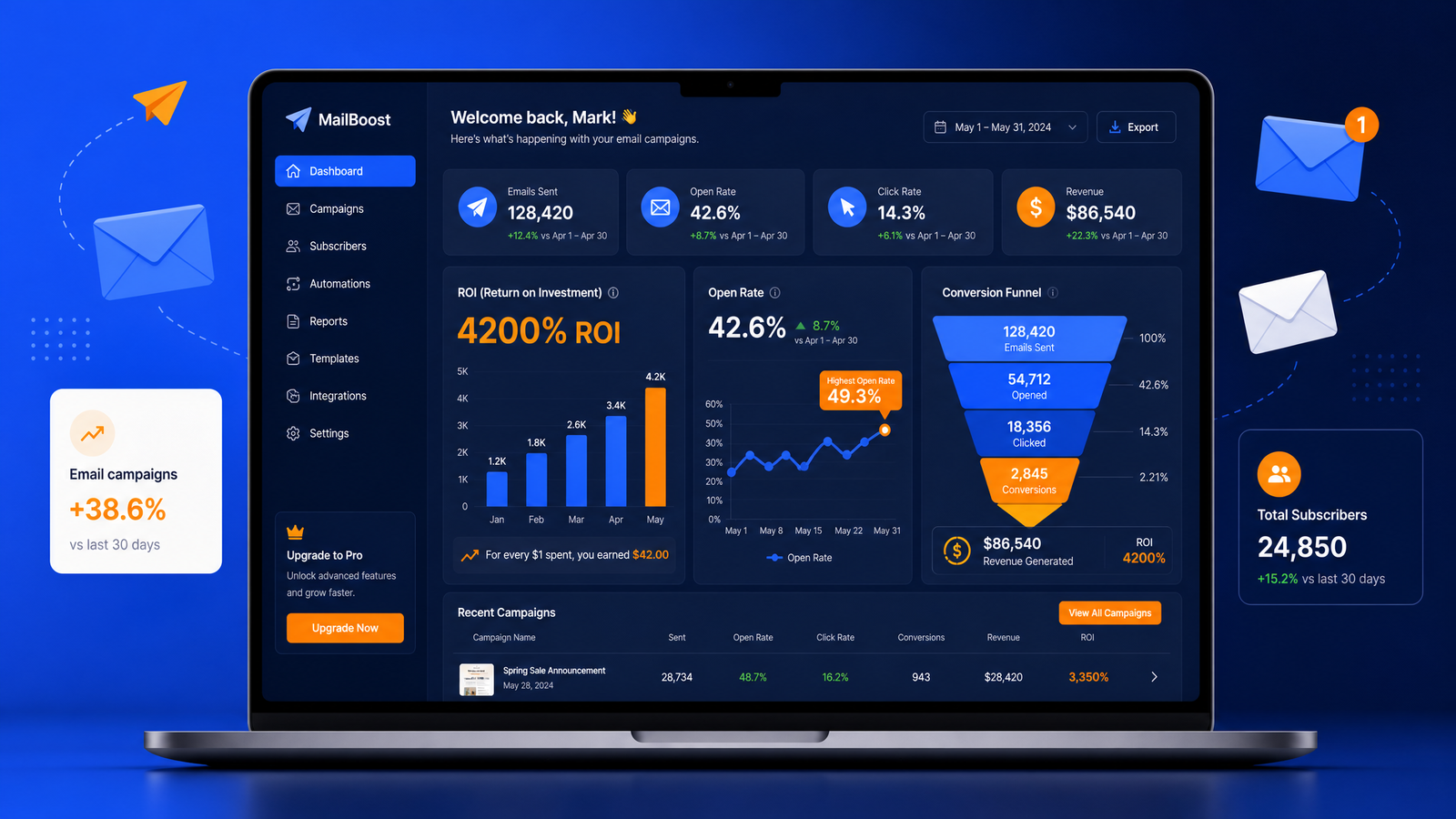
Email Marketing in 2026: Why It's Still Your Most Profitable Marketing Channel
Email marketing still delivers ₹42 for every ₹1 spent. Learn how Indian businesses can build lists,...
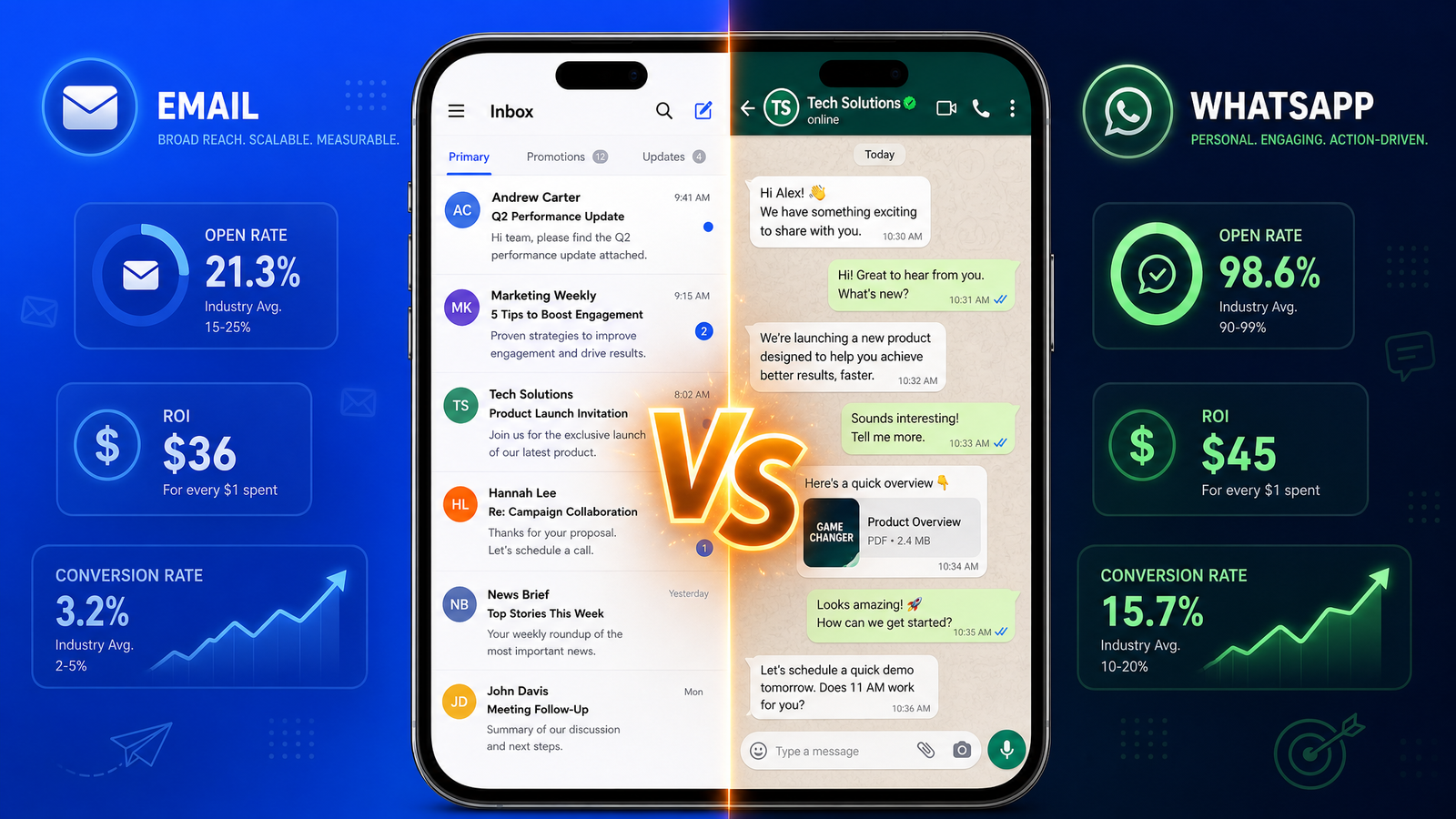
Email Marketing vs WhatsApp Marketing: Which Channel Gives Better ROI for Indian Businesses?
Email vs WhatsApp marketing — a data-driven comparison for Indian businesses. Open rates, conversion...
Ready to Grow Your Business?
Let's discuss how we can create a data-driven digital marketing strategy tailored to your goals.