
How to Measure Influencer Marketing ROI: Beyond Vanity Metrics
Stop tracking likes and followers. Learn how to measure real influencer marketing ROI with UTM codes, promo codes, engagement quality, and tools that actually work.
VidyaSaaS Team
Super Administrator
Introduction
You hired an influencer. They posted. They got 15,000 likes and 400 comments. The post looked beautiful. The client was happy.
But did it actually make you money?
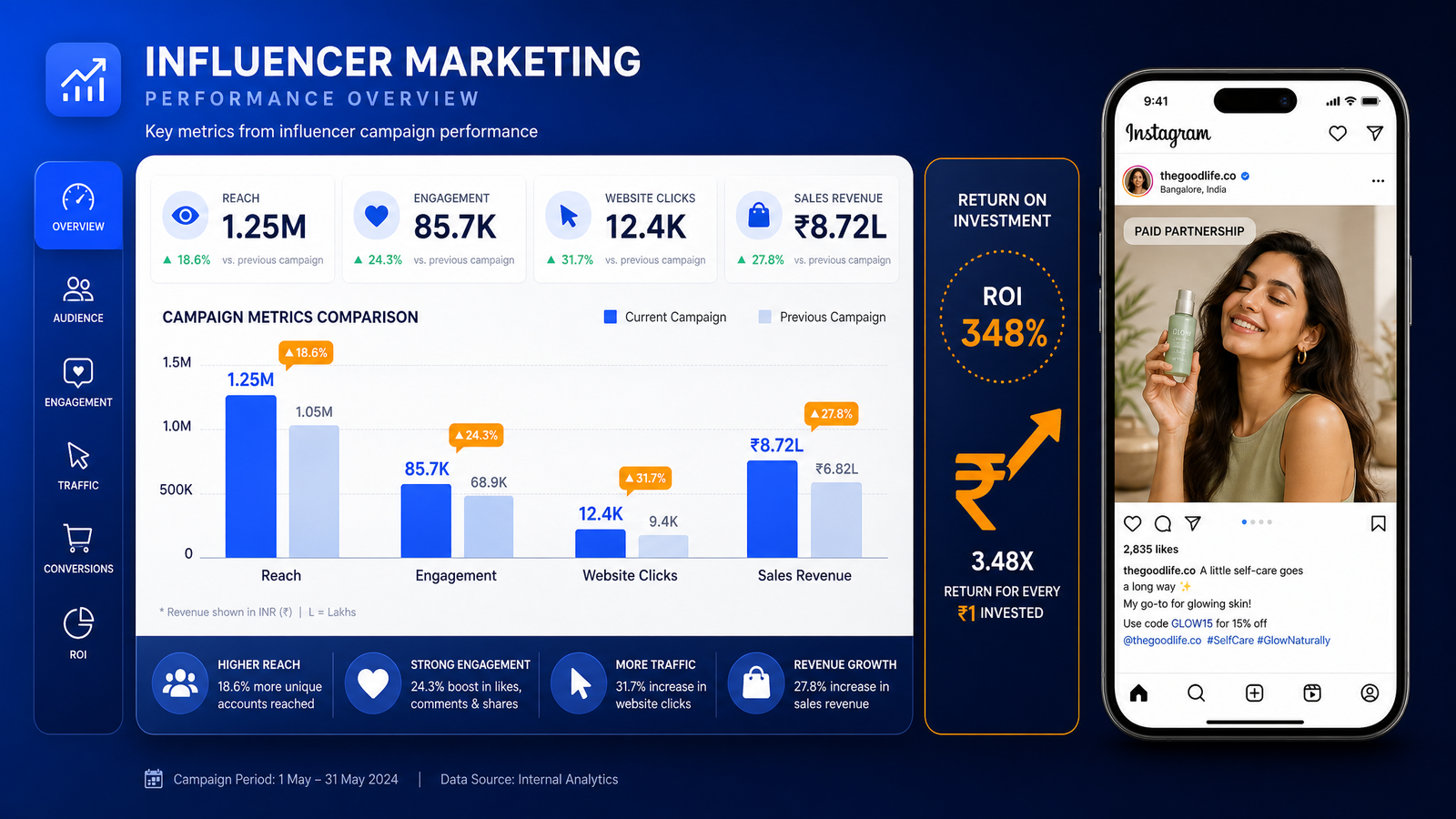
Most brands measuring influencer marketing are stuck in vanity metrics. They track likes, comments, and follower counts. They report "10 lakh impressions" and call it a success. But impressions don't pay salaries. Engagement doesn't cover your marketing budget. If your influencer campaign didn't drive measurable business results, it didn't work — no matter how many likes it got. For more on this, see influencer marketing insights.
The problem is that measuring real influencer ROI is harder than measuring traditional ad ROI. With Google Ads, you see exactly how much you spent and exactly how much revenue came back. With influencer marketing, the attribution is muddy. Someone sees an influencer post, doesn't click, Googles your brand a week later, and buys. Who gets the credit?
This guide covers exactly how to measure influencer marketing ROI in a way that your CFO will actually believe. We'll cover tracking methods, metrics that matter, tools to use, and how to report results to stakeholders.
Setting Clear Campaign Objectives
You can't measure ROI if you don't know what you're measuring for. The first step of any influencer campaign is defining the goal. For more on this, see calculating your ROAS.
Common Campaign Objectives
Awareness: You want to get your brand in front of as many relevant people as possible. How to measure it: Reach, impressions, brand search volume, share of voice.
Engagement: You want people to interact with your brand content. How to measure it: Saves, shares, comments, engagement rate, content reposts by followers.
Conversion: You want people to buy your product or book your service. How to measure it: Sales through promo codes, click-through rate to purchase page, cost per acquisition. For more on this, see content marketing approach.
Content: You want high-quality content to use on your own channels. How to measure it: Content quality score, cost per usable asset, content repurpose rate.
Audience Growth: You want to grow your own social media following. How to measure it: New followers during campaign period, follower acquisition cost, follower quality.
The SMART Framework for Influencer Campaigns
Instead of "increase brand awareness," set a SMART objective:
"Use 10 micro-influencers over 4 weeks to generate 5 lakh reach and 15,000 engagements across Instagram, with a target CPE of ₹20 or less, measured through platform analytics and UTM tracking."
This is specific, measurable, achievable, relevant, and time-bound. You know exactly what success looks like.
Tracking Methods That Actually Work
Here are the proven methods to track influencer campaign performance.
Method 1: UTM Parameters (Non-Negotiable)
Every single link your influencers share must have UTM parameters. This is not optional.
What to include in every UTM:
- utm_source: "instagram" or "youtube" or "blog"
- utm_medium: "influencer"
- utm_campaign: "[campaign_name]"
- utm_content: "[influencer_name]"
Example link:
https://yourwebsite.com/product?utm_source=instagram&utm_medium=influencer&utm_campaign=summer_launch&utm_content=priyanka_fashion
This tells Google Analytics exactly where the traffic came from and which influencer sent it. Without UTM, you're flying blind.
How to generate UTMs: Use Google's Campaign URL Builder. It's free. Create a spreadsheet of influencer-specific UTM codes before the campaign starts. Share the correct link with each influencer.
Common mistake: Giving influencers your homepage URL without UTMs. If they post "Link in bio" pointing to your homepage, you can't track which influencer drove that traffic. Every link must have its own UTM.
Method 2: Unique Promo Codes
Give each influencer a unique discount code. This is the most reliable conversion tracking method.
How it works:
- Influencer A gets code "PRIYANKA10"
- Influencer B gets code "RAHUL15"
- When customers use these codes, you know exactly which influencer drove the sale
Best practices:
- Each influencer gets their own code
- Track code usage in your e-commerce platform or a simple spreadsheet
- Monitor not just number of uses, but total revenue from each code
- Keep codes simple and memorable
Pro tip: Even if you're not offering a discount, create a unique code that gives "free shipping" or "early access." The tracking value alone is worth the small incentive.
Method 3: Affiliate Links
Affiliate marketing takes promo codes to the next level. Influencers get a commission on sales they generate.
Platforms for Indian affiliate marketing:
- Shopify Collabs: Built for Shopify stores. Manage influencers as affiliates.
- open2space: Indian affiliate platform, good for D2C brands.
- Convertful: Good for tracking multiple influencer campaigns.
- Impact: Enterprise-grade, used by major Indian brands.
Why affiliate works:
- Influencers are motivated to actually drive sales (not just post and forget)
- You pay only for results
- Tracking is automated
- ROI is clear and measurable
Method 4: Social Media Platform Analytics
Instagram Insights, YouTube Studio, and other platform analytics provide engagement data. But use this alongside UTMs and promo codes, not instead of them.
What platform analytics tell you:
- Reach and impressions
- Likes, comments, saves, shares
- Follower growth during campaign period
- Story views and tap-throughs
What they don't tell you:
- How many people actually visited your website
- How many people bought your product
- What the customer journey looked like after seeing the post
Platform analytics measure engagement. UTMs and promo codes measure business results. You need both.
Method 5: Brand Lift Studies
For larger campaigns, measure the change in brand perception before and after the influencer campaign.
How it works:
- Run a brand survey before the campaign (2-3 questions)
- Ask: "Have you heard of [brand]?" "Would you consider buying from [brand]?"
- After the campaign, run the same survey
- Measure the change
Sample size: Minimum 200 respondents per survey for reliable data. Cost: ₹10,000-₹50,000 depending on sample size and methodology.
Brand lift is most useful for awareness campaigns where direct sales attribution is difficult.
Engagement Metrics That Actually Matter
Not all engagement is equal. Here's what to track and what to ignore.
Metrics to Track
Saves: The most underrated metric. When someone saves a post, it means they intend to come back to it. Saves indicate purchase intent. A post with high saves and moderate likes is often more valuable than one with high likes and no saves.
Shares: Someone shared your content with their friends. That's organic word-of-mouth. Shares are the strongest signal of content quality.
Comment Quality: Not all comments are good. Count meaningful comments vs generic ones. "Wow so beautiful" is low quality. "I've been looking for a product like this. Where can I buy it?" is high quality.
Link Clicks: From promo links, bio links, and swipe-up links. This is the bridge between engagement and conversion.
Story Replies: Direct responses to story content. These indicate real interest.
Metrics That Are Mostly Vanity
Likes: Easy to fake. Easy to buy. Easy to get through engagement pods. Likes don't correlate strongly with sales.
Follower Count: The biggest vanity metric in influencer marketing. Follower count doesn't equal influence. A micro influencer with 15,000 real followers often drives more sales than a macro influencer with 200,000 bought followers.
Impressions: Impressions are useful for awareness campaigns but say nothing about business impact. You can get 10 million impressions and zero sales.
Views (on video): YouTube views can be inflated by bots. Check average view duration alongside total views. A video with 100,000 views but 30-second average watch time on a 10-minute video is a red flag.
Follower Quality Check: Detecting Fake Followers
Fake followers are the biggest problem in Indian influencer marketing. A significant percentage of Indian influencers have bought followers. Here's how to detect it.
Manual Checks
Suspicious profile patterns:
- Profile has 50,000 followers but follows 45,000 accounts (follow-for-follow strategy)
- Follower list contains many accounts with 0 posts, 0 followers, and generic names
- Engagement is extremely low relative to follower count
- Comments are generic ("Nice", "🔥", "Great post") from accounts with no real engagement
Tools for Follower Quality Check
HypeAuditor:
- Paid tool starting at ₹10,000/year
- Gives an audit score for any public Instagram account
- Shows audience quality score (real followers vs bots vs inactive)
- Audience demographics breakdown
Qoruz (Indian tool):
- Free basic checks available
- Engagement rate calculator
- Audience quality analysis
- Content performance analytics
Modash:
- Starting at $36/month (around ₹3,000)
- Audience quality scoring
- Fake follower detection
- Demographic analysis
Manual testing: Before committing to a paid collaboration, ask the influencer to share a screenshot of their Instagram Insights (not their public profile). Insights show real follower data, age distribution, and location breakdown. If they refuse, that's a red flag.
What to Look For in Follower Quality
- Real follower percentage: Above 80% is good. Below 60% is suspicious.
- Engagement rate consistency: Should be consistent across posts, not spiking on giveaways and dropping on regular content.
- Audience location: For an Indian brand targeting Indian customers, 80%+ of followers should be in India.
- Follower growth pattern: Gradual growth is natural. Sudden spikes (2,000 followers gained overnight) indicate purchased followers.
Cost Per Engagement Benchmarks (India)
Here are realistic CPE benchmarks for influencer campaigns in India.
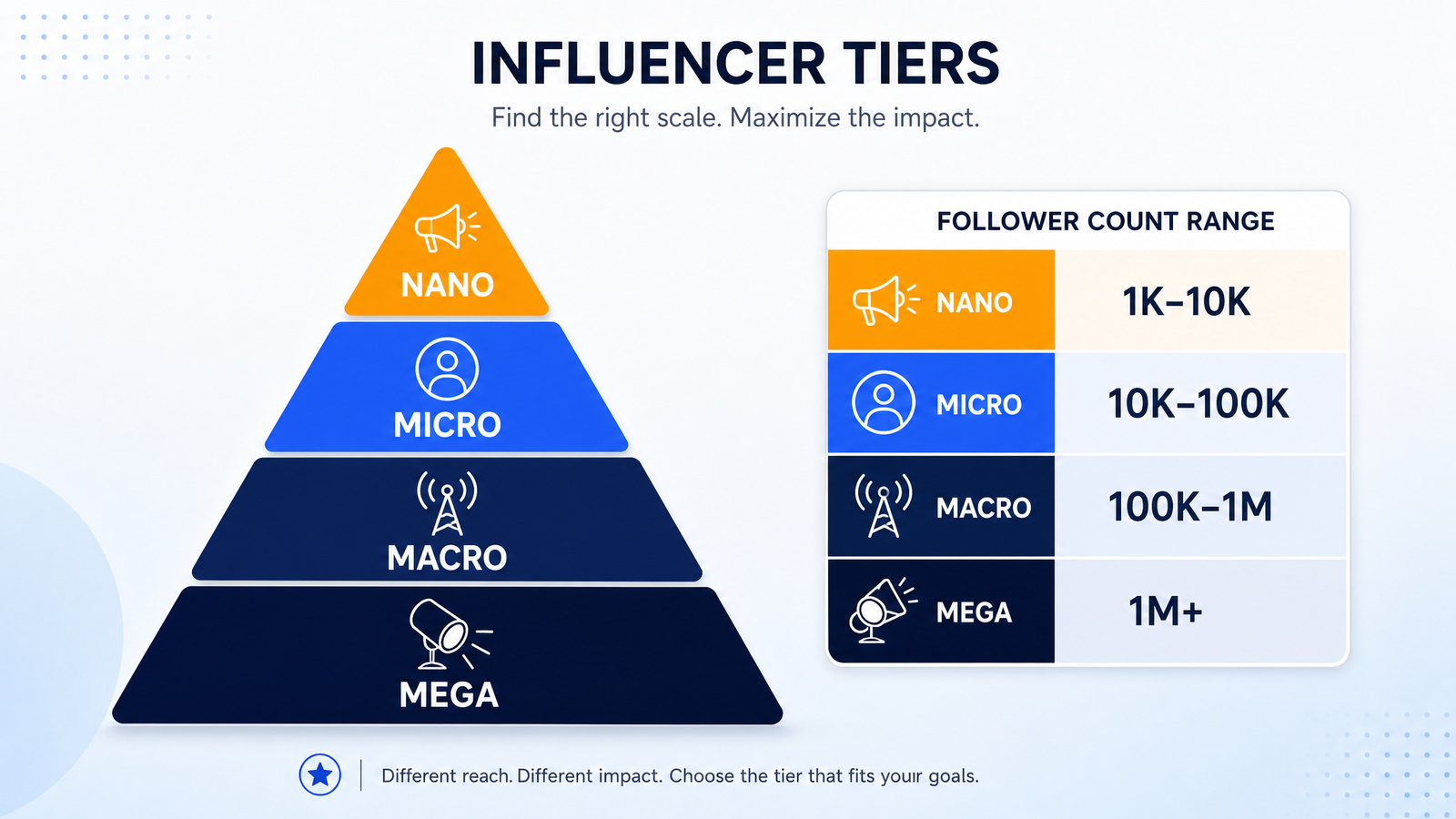
| Tier | CPL (Cost Per Like) | CPE (Cost Per Engagement) | CPM (Cost Per 1,000 Reach) | |------|---------------------|--------------------------|---------------------------| | Nano | ₹0.10 - ₹0.50 | ₹0.50 - ₹2.00 | ₹50 - ₹200 | | Micro | ₹0.50 - ₹2.00 | ₹2.00 - ₹8.00 | ₹200 - ₹500 | | Macro | ₹2.00 - ₹8.00 | ₹8.00 - ₹30.00 | ₹500 - ₹1,500 | | Mega | ₹8.00 - ₹30.00 | ₹30.00 - ₹100+ | ₹1,500 - ₹5,000 |
YouTube
| Tier | CPV (Cost Per View) | CPM | Cost Per Video | |------|--------------------|-----|----------------| | Micro | ₹0.50 - ₹2.00 | ₹500 - ₹2,000 | ₹8,000 - ₹40,000 | | Macro | ₹2.00 - ₹5.00 | ₹2,000 - ₹5,000 | ₹40,000 - ₹3,00,000 |
General Benchmark
A good rule of thumb: your CPE should be at least 50% lower than what you'd pay for paid social media engagement. If your Facebook Ads CPE is ₹10, your influencer CPE should be under ₹5 for the channel to be more efficient.
Long-Term Brand Impact Measurement
The hardest thing to measure is the long-term impact of influencer marketing. A customer might see an influencer post in January and not buy until June. How do you attribute that sale?
Methods for Long-Term Tracking
Brand search volume: Track Google searches for your brand name before, during, and after influencer campaigns. An increase indicates growing brand awareness. Use Google Trends or Google Search Console.
Direct traffic: Measure direct traffic to your website in Google Analytics. Influencer campaigns typically drive direct traffic (people open a browser and type your URL) more than other channels.
Repeat customer rate: Track if customers acquired through influencer referrals have different retention rates than customers from other channels. Influencer-referred customers often have higher trust and higher repeat purchase rates.
Organic social growth: Measure if your brand's social media following grows faster during and after influencer campaigns. Influencer exposure often leads to organic follows.
The 90-Day Attribution Window
For e-commerce businesses, use a 90-day attribution window. Someone who saw an influencer post 87 days ago and finally buys should still be attributed to that campaign. Most platforms default to 30 days, but influencer impact takes longer to convert.
Anecdotal Evidence
Don't ignore qualitative data. Collect and share stories like:
- "A customer came in and mentioned they heard about us from [influencer]"
- "Our DMs increased by 200% during the campaign, with specific mentions of the influencer"
- "Influencer's followers left comments saying they purchased because of the recommendation"
These stories don't prove ROI in a spreadsheet, but they provide context that numbers miss.
Influencer Marketing Tools for Indian Brands
Free/Cheap Tools
Google Analytics: Free. Track UTM-tagged traffic, conversion paths, audience behavior. Google Search Console: Free. Track brand search volume increases. Google Trends: Free. Compare brand interest over time. Spreadsheet: Free. Manually track influencer deliverables, costs, promo code usage.
Mid-Range Tools
HypeAuditor: ₹10,000-₹50,000/year. Influencer discovery, audience verification, campaign analytics. Qoruz: ₹15,000-₹60,000/year. Indian-specific data, influencer discovery, campaign tracking. Modash: ₹35,000-₹70,000/year. Discovery, vetting, tracking across Instagram and YouTube.
Enterprise Tools
CreatorIQ: ₹3,00,000+/year. Full campaign management, attribution, payment. Traackr: ₹5,00,000+/year. Enterprise influencer relationship management.
Start with a spreadsheet and free tools. Graduate to paid tools when you're managing 20+ influencer campaigns per month.
Reporting Results to Stakeholders
When you present influencer campaign results, your CEO or client doesn't want to see a list of likes. They want to see business impact.
The One-Page Report Template
Campaign Summary: Campaign name, duration, budget, number of influencers.
Top-line Results:
- Total reach: 5,00,000
- Total engagements: 22,000
- Website clicks: 3,500
- Campaign promo code sales: ₹2,10,000
- Average order value: ₹850
ROI Calculation:
- Total campaign cost: ₹80,000
- Direct revenue attributed: ₹2,10,000
- Direct ROI: 162% (₹2.62 returned for every ₹1 spent)
- Estimated organic uplift (brand search increase, direct traffic): +₹50,000
- Estimated total ROI: 225%
Top Performers:
- Top 3 influencers by sales, engagement, or content quality (with specific numbers)
Learnings & Recommendations:
- What worked: Reel formats with product demonstration, micro influencers with loyal followers
- What didn't: Story-only campaigns, influencers below 3K followers
- Recommendations for next campaign
Handling Low Direct ROI
Sometimes influencer campaigns drive awareness but not immediate sales. That's okay. But you need to explain it.
The framing: "This campaign focused on brand awareness for our new product launch. In the first 30 days, we saw a 40% increase in brand searches, 2,000 new organic followers, and 15% increase in direct traffic. These metrics suggest strong top-of-funnel impact. We expect conversion to materialize over the next 60-90 days."
Red Flags in Influencer Partnerships
Beyond fake followers, watch out for these issues that affect your ability to measure ROI.
No content approval process. You need to approve content before it goes live. An influencer who posts content without your approval might not include your tracking links, promo code, or required disclosures.
No access to post insights. For Instagram, ask for story completion rates, profile visits from the post, and reach breakdown. An influencer who won't share these is hiding something.
Inconsistent posting schedule. An influencer who posts your content at 2 AM on a Tuesday won't get the same results as one who posts at 7 PM on a Saturday. Agree on posting time and day in advance.
Unreasonable ownership claims. Clarify who owns the content created. Can you repurpose it for your ads, website, and social channels? If the influencer keeps all rights, you're getting one post for your money. If you can reuse the content, the value increases significantly.
📚 Related Articles You Might Like:
Conclusion
Measuring influencer marketing ROI is not as simple as measuring Google Ads ROI. But that doesn't mean you can ignore it. Every influencer campaign needs clear objectives, proper tracking, and honest measurement.
Set your goals first. Set up UTM tracking, promo codes, and affiliate links before the campaign starts. Track both engagement metrics and business metrics. Check follower quality before committing to paid partnerships. And report results in terms your stakeholders care about — not likes and impressions, but reach, traffic, leads, and revenue.
The brands that win with influencer marketing are the ones that treat it like any other marketing channel — with clear goals, proper tracking, rigorous measurement, and continuous optimization. If you treat it as a "let's see what happens" experiment, that's exactly what you'll get.
VidyaSaaS helps Indian brands plan, execute, and measure influencer marketing campaigns that deliver real business results. If you're tired of campaigns that look good but don't pay back, let's talk. Reach us at info@vidyasaas.com or call +91 97542 70102.
Want Results Like This?
Get a free digital marketing audit and custom growth plan for your business.
Get Free AuditVidyaSaaS Team
Super AdministratorPart of the VidyaSaaS team — a group of digital marketing strategists, content specialists, and growth experts helping businesses across India achieve measurable results through data-driven marketing.
More about our teamRelated Articles
Handpicked content to help you grow your business
Ready to Grow Your Business?
Let's discuss how we can create a data-driven digital marketing strategy tailored to your goals.