
Brand Identity 101: What Makes a Brand Memorable (Beyond Just a Logo)
Brand identity is more than a logo. Learn how colors, typography, voice, and storytelling build memorable brands. Lessons from Zomato, CRED, and Amul.
VidyaSaaS Team
Super Administrator
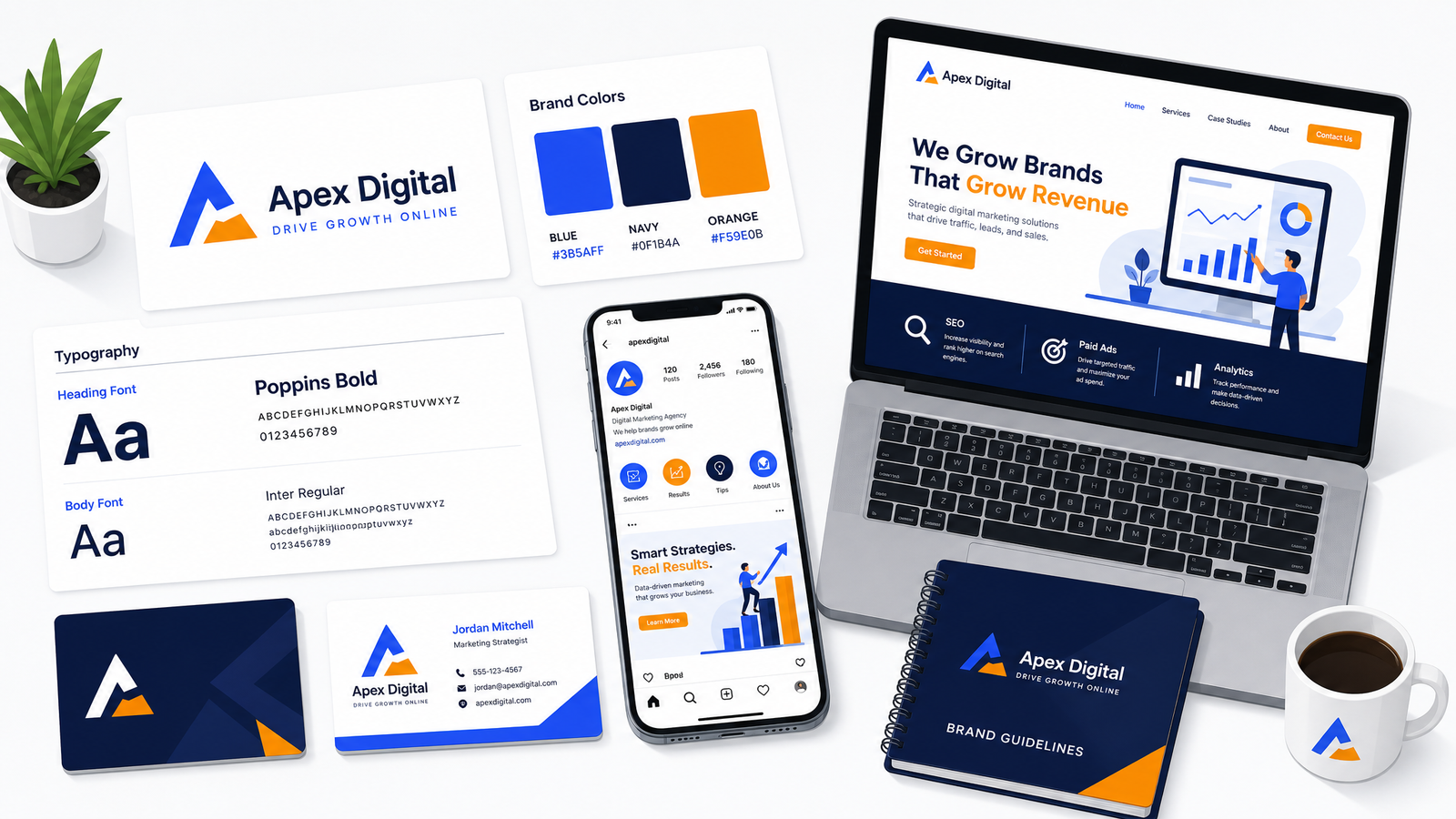
Meta Description: Brand identity is more than a logo. Learn how colors, typography, voice, and storytelling build memorable brands. Lessons from Zomato, CRED, and Amul.
Introduction
Ask a business owner what "brand identity" means, and nine times out of ten, they'll point to their logo.
It's understandable. A logo is visible. Tangible. You can show it to people and they nod. But here's the truth: your logo is not your brand. It's a symbol of your brand. The brand itself is something far bigger — a collection of feelings, perceptions, and experiences that live in your customer's mind. For a deeper dive, see brand identity guide.
Think about it. When you hear "Zomato," what comes to mind? It's not just their red-and-white logo. It's the restaurant listings. The delivery tracking. The "Ordering food was never this easy" feeling. The late-night pizza cravings they've satisfied. Zomato's brand isn't their logo — it's the entire experience they've built around food delivery.
Similarly, when you say "Amul," you don't just think of a smiling girl in a polka-dot dress. You think of quality butter, the witty topical ads, the Gujarati cooperative story, and "utterly butterly delicious."
That's the difference between having a logo and having a brand identity. For a deeper dive, see brand identity guide.
In this guide, we'll break down the components of a strong brand identity, show you how some of India's most successful brands built theirs, and give you a practical framework to build (or rebuild) your own brand identity — whether you're a startup with no budget or an established business looking for a refresh.
What Is Brand Identity, Really?
Brand identity is the collection of visual, verbal, and experiential elements that define how your business presents itself to the world. It's the sum total of everything people see, hear, and feel when they interact with your brand.
A strong brand identity ensures that every touchpoint — your website, your social media, your packaging, your customer service, your ads, your invoices — feels like it comes from the same company. This consistency builds recognition, trust, and preference over time. For a deeper dive, see graphic design for social media: 10 design principles t.
Brand Identity vs Brand Image
These two terms get confused constantly, but they're different:
- Brand identity is what you create. Your logo, colors, messaging, tone of voice. It's the input.
- Brand image is what customers perceive. How they feel about your brand. It's the output.
- The gap between the two is where most branding problems live.
If your brand identity says "premium luxury," but your brand image is "cheap and generic," you have a problem. Either your identity is wrong, or you're not communicating it effectively through every touchpoint.
Why It Matters for Indian Businesses
Indian consumers are surrounded by choices. Whether you're selling chai masala, software services, or bridal wear, there are dozens of competitors. Brand identity is the shortcut customers use to pick you.
When a brand identity is strong, customers:
- Recognize you instantly (even without seeing your name)
- Trust you more than unknown competitors
- Pay a premium for your products or services
- Defend you when others criticize
- Choose you without overthinking
When a brand identity is weak or inconsistent, customers:
- Forget you existed after visiting your website
- Question your professionalism
- Compare you purely on price
- Switch to a competitor without hesitation
The Components of Brand Identity
Let's break down what goes into a complete brand identity system.
Logo
Yes, the logo matters. It's just not the only thing that matters.
A good logo should be:
- Simple enough to recognize at a small size (think favicon or app icon)
- Appropriate for your industry (a playful font works for a toy store, not a law firm)
- Timeless (trendy logos age quickly)
- Versatile (works in black and white, on a billboard, on a business card)
But here's the thing: a logo is one element of many. Obsessing over your logo while ignoring everything else is like painting the front door of a house with a crumbling foundation.
Formats you need: Primary logo (full color), reversed logo (white on dark), simplified version (icon only), favicon (16x16 or 32x32 pixels).
Color Palette
Colors evoke emotions and create associations. This is psychology, not guesswork.
- Blue — Trust, professionalism, stability. Used by banks, tech companies, healthcare.
- Red — Energy, urgency, passion. Used by food brands, ecommerce, entertainment.
- Green — Growth, health, nature. Used by organic brands, finance, wellness.
- Orange — Creativity, enthusiasm, warmth. Used by startups, education, fun brands.
- Purple — Luxury, wisdom, creativity. Used by premium brands, beauty.
- Black — Sophistication, power, elegance. Used by luxury brands.
Your primary color is your main brand color. VidyaSaaS uses #3B5AFF (primary blue) for professionalism and trust. Your secondary color should complement it. Your accent color (like VidyaSaaS's orange #F59E0B) is used sparingly for CTAs and highlights.
Important for Indian audiences: Color meanings shift across cultures. In India, red is also associated with weddings and auspiciousness. Green has religious significance. Be aware of these cultural associations.
Formats you need: HEX codes for web, CMYK for print, RGB for screens, Pantone for precise color matching.
Typography
Your font choices communicate personality before anyone reads a single word.
- Serif fonts (Times New Roman, Garamond) — Traditional, trustworthy, serious
- Sans-serif fonts (Helvetica, Inter, Open Sans) — Modern, clean, approachable
- Script fonts — Elegant, creative, but hard to read in long text
- Display fonts — Attention-grabbing, best for headlines only
Rule of thumb: Use no more than two font families. One for headings (display or bold sans-serif), one for body text (readable serif or sans-serif).
Formats you need: Web fonts (Google Fonts, Typekit), desktop license for design software, file formats (TTF, OTF, WOFF, WOFF2).
Voice and Tone
This is the most overlooked component of brand identity. Your brand voice is the personality that comes through in everything you write.
Think about how these brands would say the same thing:
- CRED: "We reward your credit card bills. Yes, you read that right."
- Amul: "Utterly butterly delicious. Have you had your Amul today?"
- Zerodha: "Investing made simple. No nonsense. No jargon."
Same message (we make your life easier), completely different voices.
Define your brand voice with these dimensions:
- Formal vs Casual
- Serious vs Humorous
- Informational vs Inspirational
- Direct vs Storytelling
Then apply it everywhere: Your website copy, social media posts, email newsletters, customer support responses, ad copy, packaging text.
Imagery
The photos, illustrations, icons, and graphics you use should all feel like they belong to the same brand.
- Are your photos warm and candid, or cold and professional?
- Do you use illustrations, photography, or both?
- What's the color grading of your images?
- What subjects do you photograph — people, products, abstract concepts?
Stock photo rule: Don't use the same stock photos everyone else uses. Invest in custom photography or high-quality, consistent stock imagery from sources like Unsplash or Pexels that can be color-graded to match your brand.
Values and Story
This is the heart of your brand. Why do you exist? What do you believe? What problem are you solving?
Your brand story isn't a corporate history. It's the narrative that connects what you do to why it matters. When Patanjali says "back to nature," they're not selling soap — they're selling a philosophy. When Zomato says "never have a bad meal," they're not describing food delivery — they're making a promise.
Brand story framework:
- The world before you (the problem)
- What you saw that others didn't (the insight)
- What you built (the solution)
- The world you're creating (the vision)
Why Consistency Matters More Than Perfection
Here's a truth that might surprise you: a moderately good brand identity applied consistently will outperform a brilliant brand identity applied inconsistently.
Consistency builds recognition. When a customer sees your color orange in their Instagram feed, they should know it's you before they read your name. When they receive an email, the design should feel familiar. When they visit your website, it should feel like the natural extension of everything else they've seen from you.
The Cost of Inconsistency
- Different shades of your brand color on different platforms
- A logo that looks different on your website vs your Instagram profile
- Voice that shifts from formal on your website to slang on social media
- Messaging that talks about different value propositions on different channels
- Design elements that don't match across your business card, brochure, and website
Each inconsistency erodes a little bit of trust. Enough inconsistencies, and customers stop seeing a coherent brand. They see a confused business that doesn't know who it is.
Creating a Brand Guideline Document
The solution is simple: write down your rules. Create a brand guideline document (also called a brand book or style guide) that everyone in your organization follows.
A basic brand guide should include:
- Logo usage — Clear space rules, minimum size, what not to do
- Color palette — Primary, secondary, accent colors with hex, CMYK, RGB values
- Typography — Heading and body fonts, sizes, weights
- Voice and tone — Writing guidelines, words to use/avoid, sample copy
- Imagery — Photo style, illustration style, iconography guidelines
- Applications — Business cards, email signatures, social media templates, presentation templates
At VidyaSaaS, we create brand guidelines for every branding client. It prevents the slow drift that kills brand consistency over time.
How Big Indian Brands Built Their Identity
Let's look at three Indian brands that have built remarkably strong identities.
Zomato: The Red Revolution
Zomato's brand identity is a masterclass in consistency. The red color is instantly recognizable. The logo — a simple "Z" speech bubble — works at any size. The voice is direct, sometimes witty, always customer-focused.
What makes Zomato's brand strong:
- Extreme color ownership. They chose red before red was everywhere. Today, you can spot a Zomato delivery partner from across the street.
- Consistent experience. The app, the website, the packaging, the delivery tracking — all feel like Zomato.
- Brand as product. Zomato's brand IS the product, not an add-on to it.
- Voice that connects. Their social media, push notifications, and emails all speak in the same voice. Human, direct, slightly playful.
CRED: The Membership Club Feeling
CRED built a brand that made paying credit card bills feel aspirational. That's incredible branding.
Key elements:
- Typography-driven design. CRED's use of the Hanken Grotesk font is defining. Their ads are mostly type, minimal imagery.
- Exclusivity as a brand pillar. "For the creditworthy" makes customers feel special.
- Cultural relevance. Their ads reference Indian pop culture, movies, and internet humor. They speak the language of their audience.
- Gamification. The brand experience is built around rewards, levels, and status — making bill payment feel like a game.
Amul: Seven Decades of Consistency
Amul has one of the most consistent brand identities in Indian history. The Amul girl has been around since 1966. The topical ads have been running for over 50 years. The "utterly butterly delicious" tagline is embedded in the national consciousness.
What Amul teaches us:
- Timeless design. The Amul girl is simple, expressive, and hasn't needed a major redesign in decades.
- Cultural commentary as brand strategy. Amul's topical ads keep the brand relevant by commenting on current events.
- Consistency of voice. The pun-based humor has been consistent for 50+ years.
- Simplicity of message. "Amul: The Taste of India." Simple, powerful, impossible to forget.
Rebranding: When and How
Rebranding is a big decision. Do it when:
- Your business has fundamentally changed (new services, new audience, new geography)
- Your brand no longer reflects your values or positioning
- Your brand is actively hurting your business (outdated, confusing, misaligned)
- You've merged with or acquired another company
Don't rebrand when:
- You're bored of your logo (internal boredom is not a reason)
- A competitor rebranded (copying competitors is weak strategy)
- You think a new logo will fix deeper business problems (it won't)
The Rebranding Process
- Audit — What's working? What's not? What do customers think?
- Strategy — Define the new brand position, values, audience.
- Visual identity — New logo, colors, typography, imagery.
- Verbal identity — New messaging, voice guidelines, tagline.
- Implementation — Roll out across all touchpoints.
- Launch — Announce the change, explain why, build excitement.
Partial Rebrand vs Full Rebrand
- Partial rebrand — Refresh the logo, update colors, modernize. Less disruptive, lower cost. Good for companies that are healthy but dated.
- Full rebrand — New name, new identity, new everything. High risk, high cost. Only necessary when the brand is fundamentally broken.
Building Brand Identity on a Budget
You don't need a Mumbai agency with a ₹50 lakh retainer to build a strong brand identity. Here's how to do it with limited resources.
Start With Strategy (Free)
Write down answers to these questions before you design anything:
- Who are we, really? (Not what we wish we were)
- Who are our customers? (Specific, not "everyone")
- What do they think of us today? (Be honest)
- What do we want them to think? (Your brand goal)
- Who are our competitors? (Direct and indirect)
- What makes us different? (Be specific — "great service" is not specific)
DIY the Basics
Logo: Canva has decent logo templates. Or use Looka or Hatchful for AI-generated logo options. Budget ₹5,000-₹15,000 to get a freelance designer to refine what you create.
Colors: Pick 2-3 colors using Coolors.co or Adobe Color. Test them for accessibility (contrast, color blindness).
Typography: Google Fonts is free. Pick one heading font and one body font. Examples of good pairings: Inter + Merriweather, Poppins + Lora, Montserrat + Source Serif.
Voice: Write down 5 words that describe your brand personality (e.g., "friendly, expert, honest, ambitious, clear"). Use those words as a filter for everything you write.
Invest in the Essentials
Spend money on:
- Custom logo design (₹10,000-₹30,000 from a good freelancer)
- Brand guideline document (₹15,000-₹40,000)
- Professional photography (₹10,000-₹25,000 for a brand photoshoot)
- Website design that reflects your brand (₹30,000-₹80,000)
Be Consistent More Than Creative
A simple, consistent brand beats a creative, inconsistent one every time. Use templates for social media. Use brand colors in everything. Use the same profile picture across all platforms.
📚 Related Articles You Might Like:
Conclusion
Brand identity is not a luxury. It's a business necessity. In a market full of choices, your brand is how customers decide which business to trust, which product to buy, and which story to believe in.
Your logo is important, but it's not your brand. Your brand is the sum total of every interaction someone has with your business. The colors they see, the words they read, the way they feel when they engage with you.
Build your brand with intention. Be consistent. And remember that a brand is not what you say it is — it's what your customers say it is when you leave the room.
At VidyaSaaS, we help businesses build complete brand identities — from logos and color palettes to brand guidelines and full brand strategy. Over 2,000 businesses have trusted us to shape how they're seen by the world.
Ready to build a brand that people remember? The VidyaSaaS team in Bhopal can help you create a complete brand identity system that works across every channel. Get in touch for a free brand consultation.
Want Results Like This?
Get a free digital marketing audit and custom growth plan for your business.
Get Free AuditVidyaSaaS Team
Super AdministratorPart of the VidyaSaaS team — a group of digital marketing strategists, content specialists, and growth experts helping businesses across India achieve measurable results through data-driven marketing.
More about our teamRelated Articles
Handpicked content to help you grow your business

Kalaburagi Heritage to High-Tech: Branding Karnataka Emerging Business Hub Through Digital Marketing
Kalaburagi produces 30% of Karnataka tur dal and hosts major cement plants. But its brand identity i...
Ujjain Mahakal to Modern: Branding MP Spiritual and Industrial City for the Digital Age
Ujjain Mahakal Temple draws millions. Its industrial areas employ thousands. But its brand identity...
Sambalpur Digital Loom: Branding Odisha Handloom Heritage for the Ecommerce Era
Sambalpuri sarees take 3 weeks to weave by hand. But they sell online in 3 minutes when the branding...
Ready to Grow Your Business?
Let's discuss how we can create a data-driven digital marketing strategy tailored to your goals.